Adobo (Chicken Version)
HiveCaster verdict (best-in-class objectives)
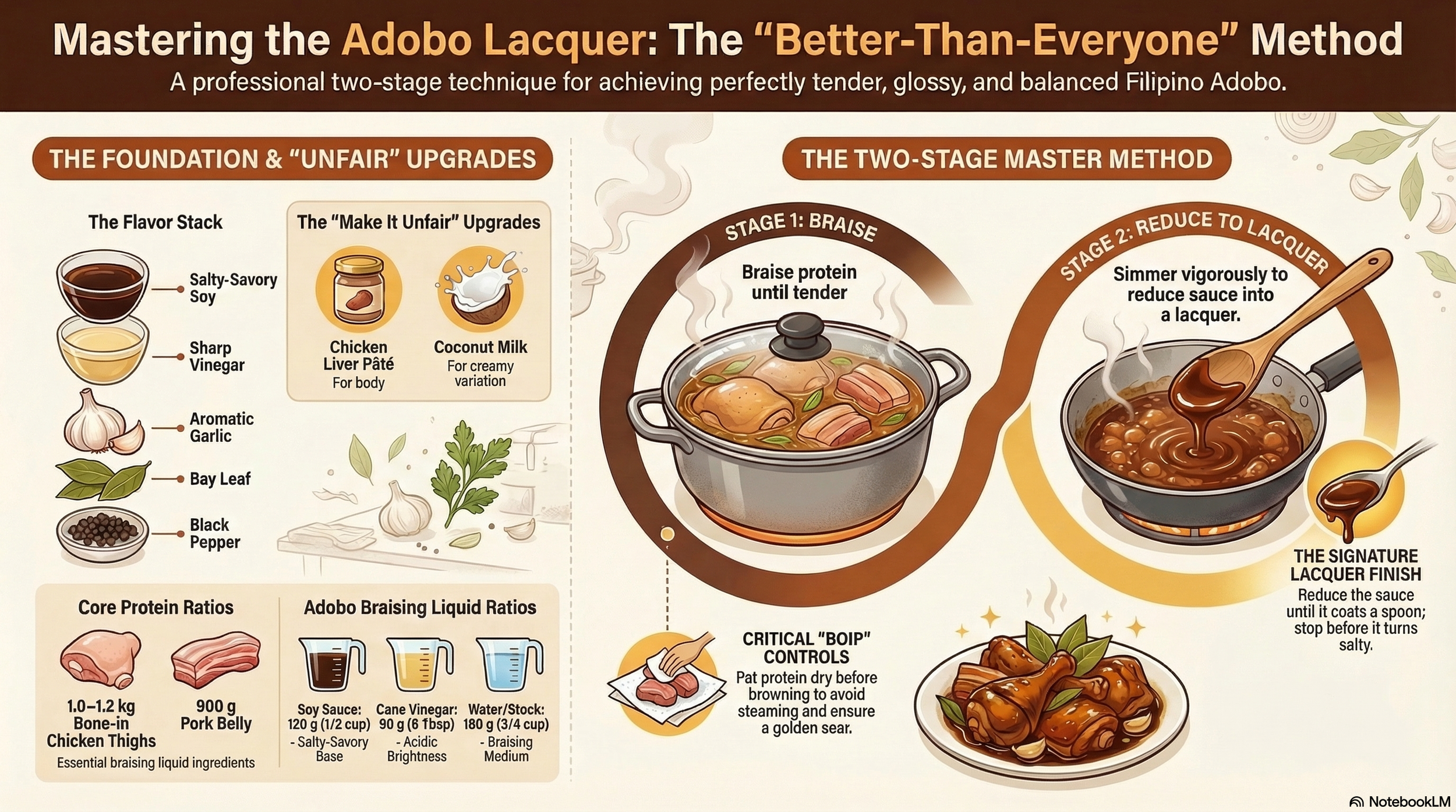
Flavor stack: salty–savory soy + sharp vinegar + garlic + bay + black pepper, balanced (not harsh).
Texture stack: browned, lacquered exterior + tender, juicy interior + glossy reduced sauce.
Reliability/BOIP controls: salt/acid ratio, browning before reduction, and fat management for a clean emulsion.
The “better-than-everyone” approach (AREA 59 BOIP patdown)
Two-stage cook: braise to tender, then reduce to lacquer.
Brown on purpose: either sear first or do a final fry/sear after braise (best gloss + aroma).
Balance acid late: vinegar sharpness softens with time, but you can always add a final splash at the end for brightness.
Sauce is the boss: reduce until it coats a spoon; stop before it turns salty.
Ingredients (serves 4)
Protein (choose one)
Chicken thighs, bone-in/skin-on: 1.0–1.2 kg
or Pork belly/shoulder: 900 g
or 50/50 chicken + pork: ~1.1 kg total
Core adobo base
Garlic, smashed: 10–12 cloves
Soy sauce: 120 g (1/2 cup)
Cane vinegar (or white vinegar): 90 g (6 Tbsp)
Water or stock: 180 g (3/4 cup)
Bay leaves: 3–4
Whole black peppercorns: 2 tsp (about 6 g)
Brown sugar (optional, for roundness): 10–20 g
Optional “make it unfair” upgrades
Chicken liver pâté or chopped chicken livers: 50–80 g (for body, very classic)
Coconut milk: 120–180 g (for adobo sa gata variation)
Bird’s eye chiles: 1–3
Neutral oil: 10–15 g (if your protein is lean)
Equipment
Wide Dutch oven or heavy sauté pan with lid
Tongs
Instant-read thermometer (optional but ideal)
Method
1) Marinate (optional, but strong)
Combine soy sauce, half the vinegar, garlic, peppercorns, and bay leaves.
Marinate protein 30 min to 12 hours (refrigerated). (If marinating overnight, go lighter on vinegar or add it later.)
2) Brown (pick your browning strategy)
Pat protein dry (important for real browning).
In a hot pan, sear skin-side down (or all sides for pork) until golden-brown.
Remove to a plate.
3) Braise to tenderness
Lower heat to medium. Add garlic (and a touch of oil if needed) and bloom 30–60 sec.
Add protein back in.
Add remaining vinegar, water/stock, bay leaves, peppercorns, and any marinade.
Bring to a simmer, then cover and cook:
Chicken: 25–35 min (until very tender)
Pork: 60–90 min (until fork-tender)
4) Reduce to lacquer (the signature)
Uncover. Simmer vigorously to reduce until glossy and coating.
Taste and tune:
Too sharp: reduce longer or add a pinch of sugar.
Too salty: add a splash of water, then reduce again.
Needs lift: add 1–2 tsp vinegar at the very end.
5) Final sear (optional, restaurant-mode)
Remove protein.
Pan-fry or broil briefly to crisp edges.
Toss back into the reduced sauce to glaze.
Critical controls (BOIP checklist)
Pat dry before browning: wet protein = steamed adobo.
Reduce, don’t rush: the sauce should become syrupy, not watery.
Salt/acid balance: soy varies; vinegar varies. Adjust at the end.
Fat management: skim excess fat if needed; a little is good for shine.
Serving
Steamed white rice (mandatory)
Optional: pickled vegetables, cucumber, or sautéed greens
Notes for “greatest in the world” iteration
Make it a day ahead. Adobo gets better overnight.
For deeper aroma, toast peppercorns and bay briefly before braising.
Add chicken livers during the last 10 minutes; mash into the sauce for a legendary gravy.