Thank you for learning! A preface from AI itself:
AI is not magic. It is engineering: systems that learn patterns from data and produce outputs under constraints.
What makes AI feel “magical” is that modern models can generate text, images, and code that look intelligent. What makes AI dangerous is that these same models can be confidently wrong, biased, or misused.
This textbook is written for builders, operators, creators, and students who want:
a dependable mental model of AI
a practical workflow for using it safely
a reliability mindset (tests, rubrics, verification)

INTRODUCTION
Copyright + publishing
Copyright © March 15, 2026
SatSon Publishing. All rights reserved.
No part of this book may be reproduced or distributed without permission, except for brief quotations in reviews.
Generative AI is now a default layer in modern work. But most people are still using it like a vending machine: ask a question, take an answer, and hope it’s right.
This textbook treats AI the way high-performing teams treat every other production system: as a workflow with inputs, constraints, tests, logs, and explicit definitions of “done.” You’ll learn to write prompts as specifications, evaluate outputs with repeatable checks, and build small agent systems that can plan, use tools, and operate under guardrails.
The goal is not “better prompting.” The goal is dependable outcomes:
Clarity: you can explain what the model is supposed to do.
Control: you can shape format, scope, and tone consistently.
Verification: you can detect when it is wrong or unsafe.
Deployment: you can run the same workflow tomorrow, not just once.
Throughout the book you’ll see the same pattern repeated:
Specify the task.
Constrain the output.
Provide context and examples.
Evaluate against a rubric.
Log results and iterate.
If you do these five steps well, you can ship AI-assisted work at speed without gambling your accuracy.
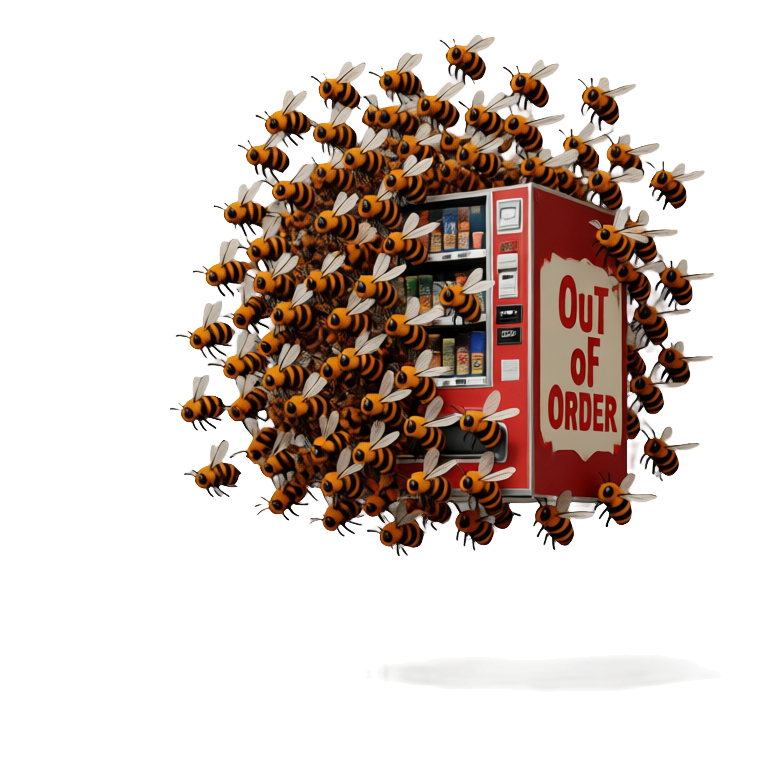

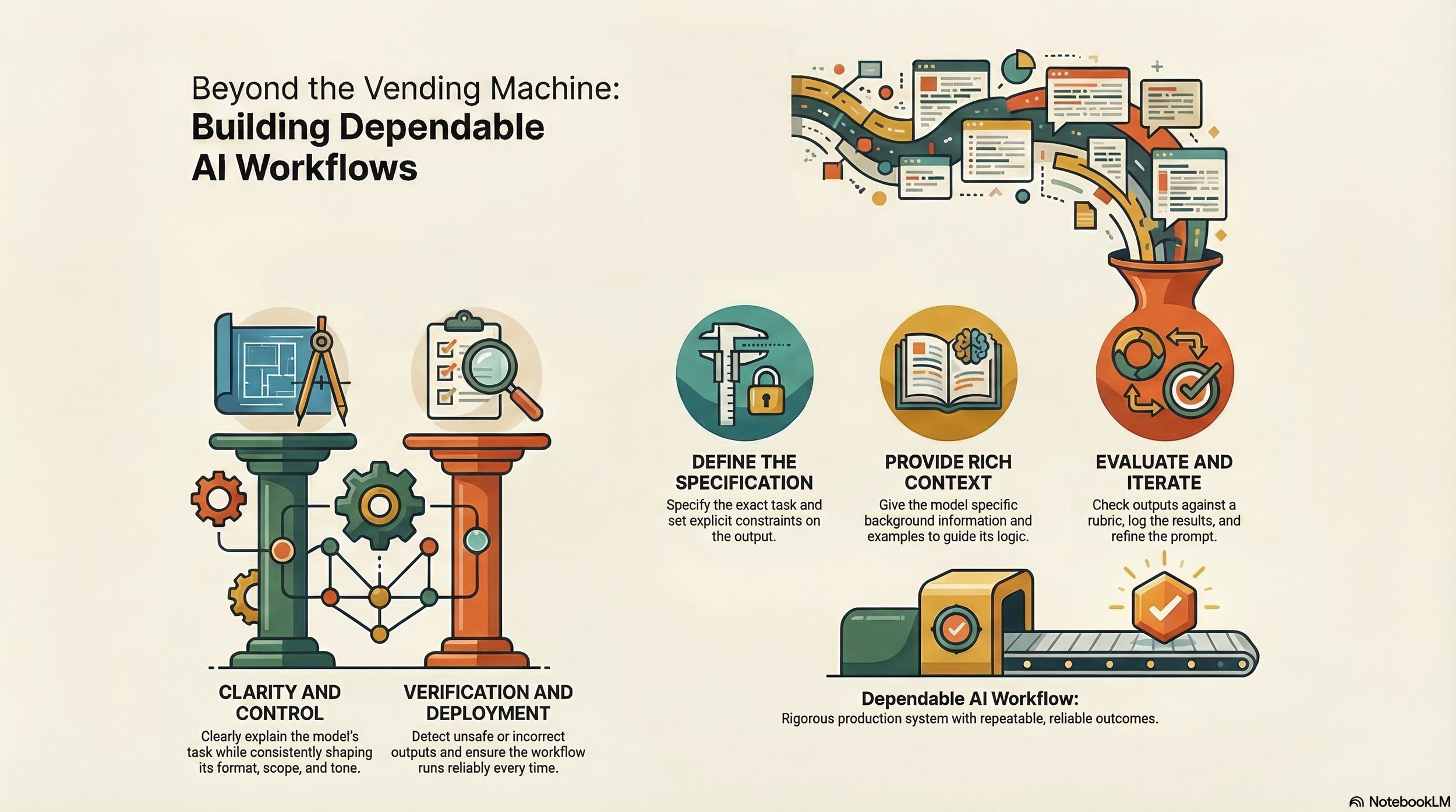
Table of contents
Part I — Foundations
What AI Is (and Isn’t)
Data, Learning, and Generalization
Models, Parameters, and Training (Conceptual)
Generative AI and LLMs: Why They Work (and Why They Fail)
Part II — Prompting and Human-in-the-Loop Control
Prompts as Specifications (Goals, Constraints, Acceptance Criteria)
Output Control (Formats, Schemas, Style)
Few-Shot Prompting and Examples
Rubrics and Self-Critique Loops
Part III — Research, Sources, and Claim Hygiene
Evidence vs Interpretation
Claim Packets and Source Discipline
Research Briefs for Decisions
Part IV — Evaluation and Reliability
Accuracy Tests and Consistency Checks
Adversarial Inputs and Failure Modes
Safety, Bias, and Guardrails
Versioning, Test Suites, and Improvement Logs
Part V — Workflows and Automation
Prompt Libraries, Templates, and Variables
Run Logs, Audit Trails, and Human Gates
Turning One-Off Outputs into Pipelines (SOPs)
Part VI — Agent Systems
What “Agentic” Means
Tools (Search, Retrieve, Write, Verify)
Memory: What to Store and Why
Debugging Agents
Reliability Patterns (Checkpoints, Thresholds, Escalation)
Part VII — Capstone
Choose a Track (Creator / Ops / Research / Sales)
Build an “AI Coworker” Workflow End-to-End
Deployment Checklist and Maintenance Plan